Add Row
Add Element
cropper
update

{COMPANY_NAME}

cropper
update
Add Element
  • Home
  • Categories
    • Essentials
    • Tools
    • Stories
    • Workflows
    • Ethics
    • Trends
    • News
    • Generative AI
    • TERMS OF SERVICE
    • Privacy Policy
Add Element
  • update
  • update
  • update
  • update
  • update
  • update
  • update
June 15.2025
3 Minutes Read

The Impact of Google's Decision to Cut Ties with Scale AI on the AI Industry

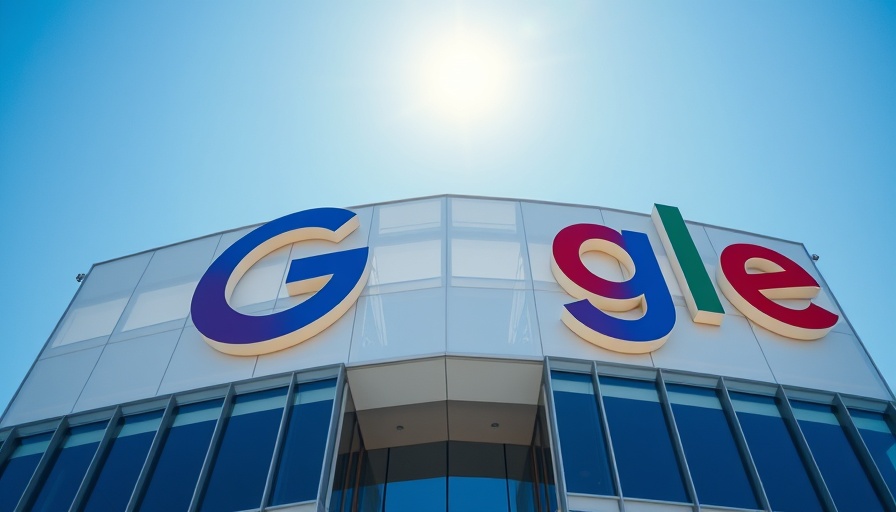
Google logo on building with clear sky, illustrating Google cuts ties with Scale AI.

Google's Shift: What It Means for the AI Landscape

In a surprising turn of events, Google reportedly plans to sever its relationship with Scale AI, a company pivotal to its generative AI strategies. This decision seems to stem from Google's concern about Scale AI's recent investment from Meta, which included a staggering $14.3 billion for a 49% stake. With major competitors like Microsoft reportedly following suit by reconsidering their partnerships with Scale AI, the industry is abuzz with speculation about the implications of these moves.

The Growing Influence of Meta

Meta's investment represents a significant shift in the dynamics of AI development. With Scale AI's CEO, Alexandr Wang, now at the helm of Meta's superintelligence initiatives, it raises questions about data privacy and the competitive landscape. Generative AI companies, who rely on annotated data to improve machine learning algorithms, may find themselves reassessing their strategies if Google and Microsoft pull back from Scale. The ripple effect of this could be immense, impacting everything from self-driving technology to government contracts.

Current Trends: A Shift in AI Partnerships

As companies evaluate the value of their current AI partnerships, it appears that trust and confidentiality are paramount. Reports indicate that clients of Scale AI might be reconsidering their alliances. The larger concern revolves around data handling and the ethical implications of sharing sensitive information with a company that has recently aligned itself closely with Meta. This places Scale at a crossroads — needing to maintain its reputation while adapting to the evolving landscape.

Counterarguments: Scale AI’s Resilience

Despite Google's potential exit, voices within the tech community remind us that Scale AI retains a robust customer base beyond Google and Meta. Scale has established relationships with self-driving car companies and governmental agencies, indicating that it isn't solely dependent on partnerships with giants like Google. A spokesperson for Scale emphasized the company’s commitment to data protection and assured its continued operation as an independent entity, signaling resilience and adaptability.

Future Insights: What Comes Next?

The evolving relationship between tech giants and AI companies hints at a broader trend of consolidation versus diversification. What should we expect moving forward? As competitors like Microsoft reassess their commitments to Scale AI, this could open avenues for newer startups to innovate and fill the gaps left by larger firms. Furthermore, the increasing focus on data security may prompt stricter regulations within the AI space, which could impact how partnerships are formed and sustained.

Conclusion: The Call for Caution in AI Ventures

For the AI industry, Google's rumored cutback on Scale AI is more than just a business decision; it's a signal for caution. In a world where data is as valuable as gold, partnerships built on trust are essential. As we move forward, tech companies must carefully reconsider their affiliations, not just from a strategic standpoint but also from an ethical perspective. For readers, staying informed on these shifts is crucial in understanding how these developments will play out in the wider technology landscape.

As always, adaptability will be key for businesses in these uncertain times. Follow the latest news for insights that matter to you and your ventures in the ever-evolving AI industry.

Generative AI

37 Views

0 Comments

Write A Comment

*
*
Related Posts All Posts
12.12.2025

Google's Gemini Deep Research: A Game Changer in AI Research Amidst OpenAI's GPT-5.2 Launch

Update Google and OpenAI Enter the Race for AI Supremacy In an uncanny twist of fate, Google announced the release of its Gemini Deep Research AI agent on the same day OpenAI launched its innovative GPT-5.2, also codenamed Garlic. This remarkable synchronicity sets the stage for an AI clash that could redefine how we interact with technology. Understanding Gemini Deep Research's Capabilities The newly redesigned Gemini Deep Research aims to revolutionize research applications with its cutting-edge Interactions API. By embedding advanced research capabilities directly into apps, developers can now leverage Google's extensive AI tools to perform complex searches and synthesize vast amounts of information more effectively than ever before. Google's focus on minimizing AI "hallucinations"—instances where the model generates false information—is particularly crucial in roles demanding long-term reasoning and reliability. DeepSearchQA: Raising the Benchmark One of the pivotal features of this upgrade is the introduction of DeepSearchQA, a new benchmark designed to assess agents on intricate information-seeking tasks. The benchmark presents a significant shift from traditional assessments by focusing on comprehensive, multi-step queries rather than merely factual accuracy. This criterion reflects the real-world challenges faced by researchers, underscoring the practical applications of AI in critical fields. Early feedback indicates that Gemini Deep Research significantly outperforms previous models, achieving state-of-the-art results on benchmarks like Humanity’s Last Exam. The Competitive Landscape: Google vs. OpenAI As both technology giants push the boundaries of what's possible with AI, the race is intensifying. OpenAI's GPT-5.2 also stellarizes its offerings, boasting improvements in coding, reasoning tasks, and everyday applications. OpenAI aims to reclaim its lead in the market following a reported decline in traffic for ChatGPT. Comparative benchmarks show that while Google’s newer model excels in certain areas, OpenAI continues to robustly challenge it, particularly in performance metrics related to coding tasks and real-world applications. This competition fuels rapid innovation, which, while exciting, leaves enterprises and developers keenly waiting to see which model will become the backbone of future AI advancements. Benefits and Practical Applications The implications of these AI developments extend far beyond basic research functionalities. In financial services, the Gemini Deep Research agent has shown incredible promise in automating due diligence processes. Investment teams can now significantly cut down the time spent on initial research phases, allowing them to focus on deeper analysis and strategic decision-making. Similarly, in the biotechnological sectors, researchers are counting on Gemini to navigate complex literature regarding drug safety. The tool's ability to sift through and synthesize vast amounts of biomedical data positions it as a prominent player in accelerating drug discovery processes. The Future of AI Research: Predictions and Trends Looking ahead, the integration of enhanced AI in traditional workflows is set to transform countless industries. Companies can optimize operations, lower costs, and harness the collective strength of human-AI collaborations to tackle complex challenges. These advancements could lead to entirely new business models and frameworks for decision-making powered by AI-driven insights. Conclusion: Preparing for Tomorrow's AI Landscape As Google and OpenAI continue to innovate, the race for AI leadership will undoubtedly spawn new tools and functionalities that reshape user experiences across varied industries. For consumers and enterprises alike, the anticipation of rapid advancements in AI technologies adds an exhilarating layer to the unfolding technological saga.

12.11.2025

Amin Vahdat's Promotion: A Strategic Move in Google's AI Infrastructure Race

Update Understanding Google’s Strategic Move in AI Infrastructure Google has recently made headlines by elevating Amin Vahdat to the position of chief technologist for AI infrastructure. This newly minted role places Vahdat directly under CEO Sundar Pichai, highlighting the critical importance of AI infrastructure within Google’s overarching strategy. The company is set to invest up to $93 billion in capital expenditures by the end of 2025, with increased spending anticipated in the subsequent year. Vahdat’s promotion is not merely a recognition of his tenure but signifies a shifting focus in Google's ambitious AI vision. Vahdat's Journey: From Academia to the C-Suite Amin Vahdat’s career trajectory is notable. Holding a PhD from UC Berkeley, he transitioned from academia to Google in 2010. With nearly 15 years at Google, he has been integral in developing the company's AI backbone, including innovations like custom Tensor Processing Units (TPUs) and the advanced Jupiter network, known for its impressive speed and capacity of 13 petabits per second. His role has morphed from research to a leadership position, where he orchestrates the work that keeps Google competitive in the bustling AI marketplace. The Arms Race of AI Infrastructure: Why It Matters The AI landscape is changing rapidly, and with it, the need for robust infrastructure has skyrocketed. Companies like Google are competing against giants such as Microsoft and Amazon, who are also heavily investing in data centers and computational resources. The focus on infrastructure echoes sentiments shared by Thomas Kurian, Google Cloud’s CEO, emphasizing that this is crucial to remain ahead in the race for AI supremacy. Vahdat’s role thus positions him at the forefront of this critical pivot in tech strategy. The Technical Edge: Custom Solutions Drive Success Vahdat’s achievements are not just theoretical. His signature contributions include leading the development of the TPU lineup, which offers unparalleled performance for AI tasks. Google's competitive edge lies not just in sophisticated algorithms but in their ability to efficiently process vast amounts of data at scale. His previous work on the Borg cluster management system, which manages thousands of operations simultaneously, remains pivotal in maximizing efficiencies throughout Google's data centers. Future Predictions: The Role of Scaling in AI As AI demands continue to skyrocket—growing by a staggering factor of one hundred million over just eight years—understanding scaling will be vital for all players in the industry. Vahdat’s appointment foreshadows ongoing innovations and optimizations aimed at enhancing AI capabilities, which remains a true differentiator amidst the competition. With Google’s commitment to reducing operational costs while maintaining effectiveness, the future is likely to see even more ambitious projects designed to keep pace with an evolving technological landscape. Retention Strategy: Keeping Talent in a Competitive Landscape In an industry where retaining top talents like Vahdat can determine a firm’s future, his elevation to chief technologist is as much about safeguarding talent as it is about creating leadership structure. The challenges of recruiting and retaining skilled engineers has intensified as AI grows in prominence. By promoting someone with profound knowledge of its systems and infrastructure strategy, Google aims to mitigate the ‘talent poaching’ dilemma that afflicts many tech firms. In a time when AI infrastructure is becoming the bedrock for sustained technological innovation, understanding these shifts at Google offers insights not just into their internal strategy, but into broader industry trends that could redefine how tech companies operate and compete. It's a pivotal moment that both enhances Google’s leadership and mirrors the urgency across the tech community to innovate and retain exceptional talent. With these developments, staying updated on industry changes is essential. As AI continues to evolve, so too will the strategies that underlie its infrastructure—ushering in a era of remarkable technological achievements.

12.09.2025

Nvidia's H200 Chip Exports to China: Navigating AI and National Security

Update The Export of Nvidia's H200 Chips: A New Era of AI Diplomacy In a significant shift in U.S. foreign policy, the Department of Commerce has approved the export of Nvidia's advanced H200 AI chips to China. This decision, applauded by Nvidia, reflects a balance that aims to support America's semiconductor industry while appeasing complex international relations with Beijing. President Trump informed that the U.S. government will receive a hefty 25% fee on these sales, a notable increase from the previously proposed 15%. Understanding the Importance of AI Chips in Global Trade AI chips, particularly the H200, are pivotal in processing massive amounts of data, essential for tasks ranging from machine learning to predictive modeling. This recent approval emphasizes the high demand for such technology in China, particularly as Chinese firms like Alibaba and Huawei seek to climb the technology ladder. Yet, the approval also raises eyebrows due to national security concerns surrounding AI applications potentially benefiting China's military endeavors. Political Perspectives: Bipartisan Scrutiny Over National Security As the decision unfolds, bipartisan apprehensions mount over the implications of exporting advanced chips. Congressional leaders have introduced legislation seeking to impose stricter controls, such as a 30-month ban on licenses for advanced AI chip exports to China. This political climate illustrates the discomfort among legislators who fear that enabling China's tech advancements could enhance their military capabilities. Future Implications for AI Technology in Global Markets The export of H200 chips signals a recalibration of U.S. trade policies amid heightened competition in AI technology. As global markets navigate this alteration, companies operating within the AI sector may strategically assess their own approaches towards international sales. If Chinese firms manage to penetrate the U.S. chip market, it could create a reciprocal trading scenario, further complicating U.S. interests. Cultural Reactions: China's Reception of U.S. Chip Exports The response from the Chinese government and businesses remains pivotal. While the state may exhibit resistance due to nationalistic pride and security concerns, the demand for advanced technology might compel them to engage. Observers suggest that despite political tensions, the practical benefits of acquiring superior technology like the H200 could outweigh collective national hesitations. Conclusion: What Lies Ahead for U.S.-China Technology Relations As leaders navigate a complex web of trade, national security, and technological competition, the sale of Nvidia’s H200 chips represents more than just a business transaction; it illustrates the growing entwinement of tech innovation and international diplomacy. Stakeholders in both the U.S. and China continue to assess the unfolding implications of this decision on their respective markets and geopolitical standing. In light of these developments, staying informed about the evolving landscape of AI chip exports will be crucial for professionals engaged in technology and international trade. Understanding the dynamics at play can not only clarify market predictions but also prepare industries for shifts in policy and demand.

Terms of Service

Privacy Policy

Core Modal Title

Sorry, no results found

You Might Find These Articles Interesting

T
Please Check Your Email
We Will Be Following Up Shortly
*
*
*