Add Row
Add Element
cropper
update

{COMPANY_NAME}

cropper
update
Add Element
  • Home
  • Categories
    • Essentials
    • Tools
    • Stories
    • Workflows
    • Ethics
    • Trends
    • News
    • Generative AI
    • TERMS OF SERVICE
    • Privacy Policy
Add Element
  • update
  • update
  • update
  • update
  • update
  • update
  • update
October 09.2025
2 Minutes Read

Google Expands Opal AI Vibe-Coding App to 15 More Countries: Unlocking Global Creativity

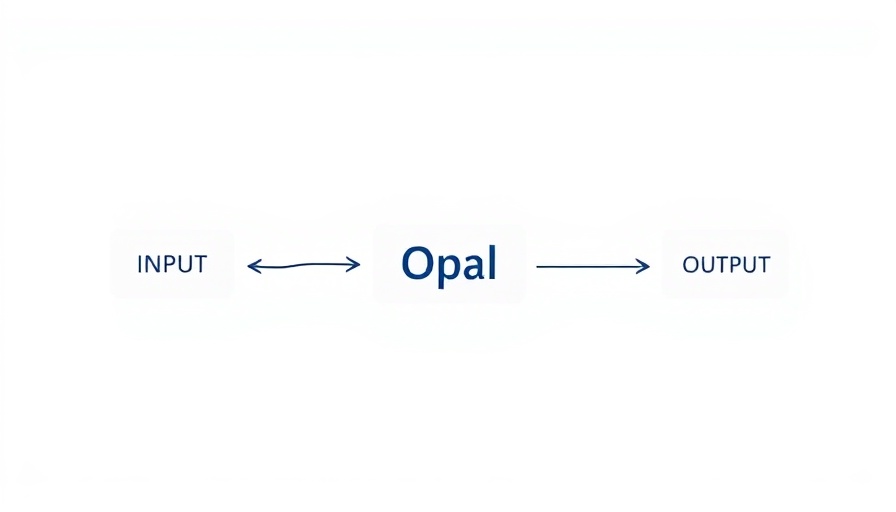
Google Opal AI vibe-coding app expansion diagram.

The Game-Changing Expansion of Google's Opal App

Google's innovative AI vibe-coding app, Opal, has officially launched in 15 new countries, including major markets such as Canada, India, Japan, and Brazil. This exciting expansion follows a successful rollout in the United States, where the app quickly gained traction, surprising developers and users alike with the creativity and sophistication of the mini-apps created using simple text prompts.

Unlocking Creativity with No-Code Solutions

Opal empowers users to create functional mini-web applications without any coding experience, reinforcing a growing trend toward no-code platforms. This user-friendly tool enables anyone to bring their ideas to life by simply describing the app they wish to build. As Megan Li, senior product manager at Google Labs, noted, "The ingenuity of these early adopters made one thing clear: we need to get Opal into the hands of more creators globally." With this expansion, Google is set to further democratize app creation, allowing diverse creators to innovate across various sectors.

New Features Enhance User Experience

In tandem with the geographical expansion, Google is also introducing significant updates to Opal, including advanced debugging capabilities. Users can now run their workflows step-by-step, with errors pinpointed in real time, ensuring ease and transparency throughout the development process. The company has also dramatically improved the app's performance; what previously took several seconds to develop is now streamlined, allowing for quicker project iterations. This enhancement is crucial in today's rapid development environment, where speed and efficiency are paramount.

The Path Forward: Inviting Global Participation

As Opal continues to grow, interested users can access the platform at opal.withgoogle.com and participate in the app's dedicated Discord community. This community engagement path allows creators from newly added countries to share experiences, collaborate, and inspire one another in their app-building journeys.

Concluding Thoughts

Google's expansion of Opal underscores the accelerating trend toward no-code development solutions in the industry, setting the stage for innovative, user-generated applications that could address various organizational and personal needs. Whether streamlining workflows in business or facilitating creative collaborations, Opal represents a significant leap toward empowering global developers without deep technical expertise.

Tools

20 Views

0 Comments

Write A Comment

*
*
Related Posts All Posts
12.03.2025

Google's AI Personalization: Striking a Balance Between Helpfulness and Surveillance

Update Understanding Google’s AI Personalization Strategy With the rise of AI technologies, Google is now exploring a new frontier of user interaction through advanced personalization. According to Robby Stein, VP of Product for Google Search, the company believes that it can significantly enhance its AI capabilities by leveraging the wealth of information it already possesses about its users. This involves integrating AI into various Google services like Gmail and Google Drive, which could potentially provide suggestions and responses that feel uniquely tailored to individual needs and preferences. The Dilemma of Surveillance vs. Service While Google advocates for this innovative approach—as a means to deliver a more useful and engaging AI experience—there lurks a pressing concern about privacy. As users become increasingly aware of what data is collected and how it is used, many feel caught in a web of surveillance that feels intrusive. This tension between becoming a 'helpful assistant' and an intrusive observer has become a defining challenge for Google as it rolls out these processes. Spanning Across Personal and Sensitive Data Unlike traditional search engines that primarily sourced data from public domains, Google’s AI now pulls from a broad array of personal details, incubating a comprehensive digital profile of each user. These include sensitive details like location history, browsing habits, and even preferences gleaned from emails. This almost all-knowing aspect resembles storylines from popular media, like the hit show “Pluribus,” where AI not only anticipates user needs but intrudes on personal spaces, provoking discomfort. The Importance of User Consent and Control Despite assurances from Google that users can manage app permissions under “Connected Apps,” the necessity for clear transparency remains paramount. Users must not only understand what data is being utilized but also how they can control it. The potential hesitancy around opting into personalized services is significant; many users might simply feel safer pulling back from such integration to preserve their privacy, despite the gained advantages of personalization. Looking Forward: The Balance Between Utility and Privacy The merging of AI and personalized services presents an uncertain future. The ability for Google to provide practical and meaningful assistance while respecting user privacy is crucial for fostering trust. If the company can find harmony between enhanced user experience and robust privacy provisions, it may build a foundation where personalization is not just beneficial, but also ethically sound.

11.29.2025

How Kevin Damoa Transformed Military Logistics Into Startup Success

Update From Military Experience to Entrepreneurial SuccessKevin Damoa, the founder and CEO of Glīd, has transitioned from a military logistics background to becoming the champion of Startup Battlefield 2025. His victory serves as a testament to the importance of using one's unique experiences to solve pressing infrastructure challenges.Innovation in Infrastructure: Redefining LogisticsDamoa's journey highlights how the skills honed in the military can be repurposed in the startup world. At Glīd, he addresses real-world problems, particularly focusing on integrating autonomous solutions that link congested urban roads with underutilized rail networks. This approach not only alleviates traffic but also promotes sustainability by maximizing existing resources.The Power of a Mission-Driven CultureGlīd's success is underscored by a company culture steeped in mindfulness and mission orientation. Damoa emphasizes that fostering such an environment is crucial to navigating the complex terrains of the tech industry. With over $70 million in pre-committed customer investments, it’s clear that a strong value proposition resonates with clients in today’s market.Lessons from Startup Battlefield 2025The Startup Battlefield 2025 experience has also provided Damoa with invaluable insights into what distinguishes a startup from its competitors. Networking with leading venture capitalists and tech visionaries during the event undoubtedly paved the way for further growth opportunities for Glīd.Looking Ahead: What’s Next for Glīd?As Glīd moves forward, the objectives are clear: continue pushing the boundaries of what autonomous logistics can achieve. Damoa encourages aspiring entrepreneurs to adopt a mindset focused on problem-solving and to leverage their unique personal journeys to create impactful solutions.In a world increasingly reliant on technology, the capacity to innovate in logistics will play a critical role in shaping urban environments. As Kevin Damoa leads Glīd into the future, his experiences remind us of the potential for military veterans to drive meaningful change within the business ecosystem.

11.26.2025

OpenAI's Upcoming Device Aims for a Peaceful Future, Unlike the iPhone

Update OpenAI's New Device: A Vision for Calm Connectivity In a world inundated with digital distractions, OpenAI CEO Sam Altman envisions a different type of technology—one that is not only functional but also calming and uplifting. At a recent event in San Francisco, Altman described the forthcoming AI device, designed in collaboration with renowned designer Jony Ive, as a pivotal shift in how users will engage with technology. Rather than a flashy, screen-oriented gadget, this pocket-sized, ‘screenless’ device aims to feel intuitively simple and serene. Reimagining Technology's Role Described by Altman as akin to “sitting in the most beautiful cabin by a lake,” the device is engineered to serve as a supportive companion rather than a source of distraction. He expressed frustration with current consumer technologies that bombard users with relentless notifications and demands for attention—a sentiment shared by many as they navigate the overstimulating nature of modern life. This upcoming device promises to filter out chaos, presenting information only when it's deemed appropriate, allowing for a more mindful interaction. A New Era of AI Interaction Altman asserted that the device would leverage advanced AI capabilities to continuously adapt to the user’s context and preferences over time. This contextual awareness is envisioned to foster a trust relationship between the device and its user, offering personalized assistance without the need for constant oversight. “You trust it over time,” he stated, suggesting that the device would evolve to align more closely with individual lifestyles and needs, potentially ushering in a new era of human-tech relations. While specifics about the launch timeline remain vague, both Altman and Ive confirmed that consumers can expect to see this innovative gadget within the next two years. With several technical challenges still being addressed, including privacy concerns regarding constant listening capabilities, the collaboration represents a bold step towards integrating AI into everyday life while prioritizing emotional well-being. Expectations and Industry Impact The anticipation surrounding this AI device reflects a larger trend in the tech industry: the quest for products that enhance human experience rather than detract from it. As consumers increasingly seek tools for peace and focus, the successful launch of Altman and Ive’s device could showcase a new model of technology that harmonizes efficiency with emotional comfort. If realized, this vision could redefine product design in the tech landscape, aligning with echoes of other innovative consumer electronics that have transformed daily life. In conclusion, as we await more details about this novel device, it becomes imperative for the industry to focus on creating tech that supports our need for serenity amidst a fast-paced world. The outcomes of this project could not only excite consumers looking for simpler solutions but also significantly influence tech design negotiations for years to come.

Terms of Service

Privacy Policy

Core Modal Title

Sorry, no results found

You Might Find These Articles Interesting

T
Please Check Your Email
We Will Be Following Up Shortly
*
*
*